
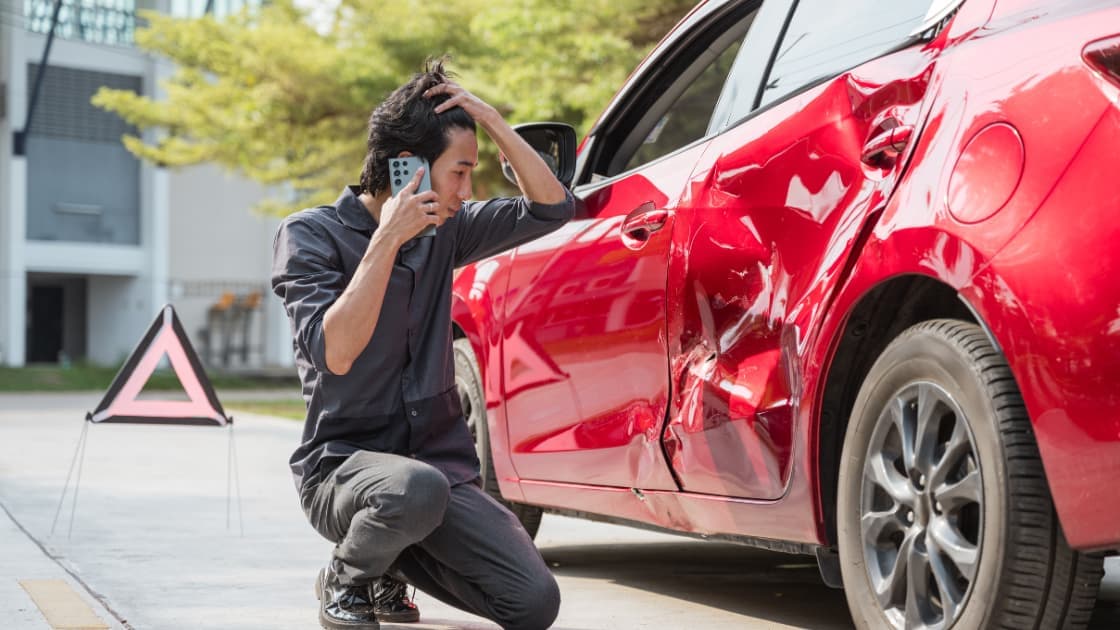
Car accident legal steps UAE — knowing them before you need them is the difference between a stressful but manageable experience and one that results in invalidated insurance claims, criminal liability for leaving the scene, or financial exposure that a correct procedure would have prevented. The UAE’s traffic law framework is specific, mandatory, and strictly enforced. Every driver on UAE roads has a defined legal obligation from the moment of impact — and the actions taken in the first minutes determine the outcome of everything that follows: the police report, the insurance claim, the fault determination, and any civil or criminal proceedings.
This guide covers the complete framework — the governing legislation, the specific legal obligations at the scene, the documentation that must be gathered, the digital reporting pathways available by emirate, the insurance notification obligations and their timelines, what happens when fault is disputed, how compensation is calculated for serious injuries and fatalities, and what remedies exist when an insurance company undervalues or rejects a legitimate claim. Every external link in this guide points to a UAE government or Central Bank of the UAE source only.
This article addresses the complete legal framework governing car accidents in the UAE, covering immediate obligations at the scene, documentation requirements, police reporting procedures, and insurance claim pathways. The legal framework comprises three distinct systems: Federal Decree-Law No. 14 of 2024 on Traffic Regulation, the Unified Motor Vehicle Insurance Policies Regulation administered by the Central Bank of the UAE, and civil liability provisions under Federal Law No. 5 of 1985. Practical implications include mandatory scene-of-accident obligations such as stopping, securing the area, calling 999, documenting all evidence through photographs and witness statements, and obtaining the Traffic Accident Report that determines fault and governs all subsequent insurance and civil proceedings. The article serves drivers, vehicle owners, insurance claimants, and anyone involved in or witnessing a traffic collision in the UAE, providing emirate-specific digital reporting pathways for Dubai and Abu Dhabi, timelines for police notification, penalties for leaving the scene, and the legal consequences of failing to obtain proper repair permits before vehicle restoration.
Generated by AI · Not legal advice
- Federal Decree-Law No. 14 of 2024 on Traffic Regulation now governs all traffic accident legal obligations in the UAE, replacing the previous Federal Law No. 21 of 1995.
- Drivers involved in any accident causing damage to a person, animal, or property must provide personal and vehicle details to police and inform the nearest police station within six hours if no officer is present at the scene.
- Leaving the scene of an accident that harms the safety of an individual is a criminal offence carrying penalties including imprisonment, and refusing to provide correct details to police carries imprisonment of not less than one year and a fine of not less than AED 100,000.
- No vehicle showing signs of accident damage may be repaired without a vehicle repair permit issued by the Traffic Control Authority, and repairing without this permit invalidates insurance claims.
- The Traffic Accident Report issued by police is the authoritative fault determination document that insurers rely upon and governs all subsequent insurance claims, civil litigation, and criminal proceedings.
- Minor accidents without injuries can be reported digitally through the Dubai Police app in Dubai, the Abu Dhabi Police app in Abu Dhabi, or the nationwide MOI UAE app, with electronic reports carrying the same legal weight as physical police-issued reports.
The Governing Legal Framework
The UAE’s traffic accident legal framework is now governed by Federal Decree-Law No. 14 of 2024 on Traffic Regulation — which repealed the previous Federal Law No. 21 of 1995 — alongside its implementing Executive Regulations and ministerial resolutions. The new Decree-Law is published in full on the UAE Legislation Portal. The UAE Government Portal’s road safety page confirms that Federal Decree-Law No. 14 of 2024 now applies alongside Ministerial Resolution No. 130 of 1997, Ministerial Resolution No. 178 of 2017, and Cabinet Resolution No. 30 of 2017.
Motor insurance obligations — what insurers must pay, in what circumstances, and to whom — are governed by the Unified Motor Vehicle Insurance Policies Regulation, administered by the Central Bank of the UAE, whose full text is published on the CBUAE Rulebook.
Civil compensation for accident injuries and fatalities is governed by the Civil Transactions Law — Federal Law No. 5 of 1985 — and injury claims must generally be filed within three years from the date the claimant knew of the damage and the responsible person, as confirmed on the UAE Official Government Portal’s legal provisions page.
Understanding that three separate legal frameworks govern a single car accident — traffic law, insurance regulation, and civil liability — is the foundation of an effective post-accident response. Each framework has its own authorities, its own timelines, and its own remedies.
Step 1: The Immediate Legal Obligation — Stop, Secure, and Call
The most fundamental obligation under UAE traffic law is stated explicitly in Federal Law No. 21 of 1995 (now replicated in Federal Decree-Law No. 14 of 2024): all motor car drivers involved in an accident causing damage to a human being, an animal, or property owned by a third party shall give their personal details and the details of their vehicle to any police officer present at the scene, and shall offer all possible assistance to provide the necessary aid to those hurt. The driver shall inform the nearest police station of such an accident within a maximum period of six hours unless a reasonable excuse exists for the delay, if no police officer is present at the scene — as set out on the UAE Legislation Portal’s traffic law page.
Federal Decree-Law No. 14 of 2024 explicitly prohibits attempting to escape in the event of an accident that harms the safety of an individual, or in the event of a stop order issued by a Traffic Control Authority member. Leaving the scene of an accident without police permission is a criminal offence carrying serious penalties including imprisonment.
The first minute checklist:
Turn on hazard lights immediately — this is both a safety obligation and a legal one. The hazard lights alert other road users to a stationary vehicle and reduce the risk of secondary collisions, which the driver of the stationary vehicle may be held liable for failing to prevent.
Check for injuries. Approach other vehicles carefully and check whether the occupants can move independently. Do not attempt to move a person who is unconscious or who may have a spinal or neck injury unless they are in immediate danger from fire or traffic — moving an injured person without medical training can cause additional injury and creates legal exposure.
Call 999 immediately. For all accidents involving injuries, significant damage, or any uncertainty about the severity of the incident, the police emergency number 999 is the mandatory first call. The operator will assess the situation and dispatch police, ambulance, or both, and will instruct whether to remain at the scene or move to a safe location.
The eCall system — launched by the Telecommunications and Digital Government Regulatory Authority in cooperation with Abu Dhabi and Dubai Police — provides an automatic two-way voice connection to the nearest emergency centre in the event of a collision for vehicles equipped with the system, as confirmed on the UAE Government Portal’s road safety page. In the event of a collision, eCall automatically establishes communication via the cellular network to the nearest emergency centre, which dispatches a medical team and logs automatic and voice information simultaneously.
Step 2: Secure the Scene — Move or Stay
The decision whether to move vehicles after an accident is governed by specific rules — and getting it wrong creates both safety risks and legal complications.
For accidents involving injuries or fatalities: Do not move the vehicles. The police must document the exact positions of all vehicles, the skid marks, the point of impact, and all physical evidence at the scene. Moving vehicles before the police arrive destroys evidence that the traffic investigation requires to determine fault. Leave vehicles exactly where they stopped and exit to a safe area away from traffic.
For minor accidents with no injuries and minor damage: The police operator who answers your 999 call may instruct you to move the vehicles to the side of the road — the hard shoulder or a safe area — before completing the report digitally. Follow the operator’s specific instruction. In Dubai and Abu Dhabi, minor accidents without injuries can be reported through approved digital channels after the vehicles have been moved to a safe position.
No vehicle that has signs of accident or damage may be repaired without a vehicle repair permit issued by the Traffic Control Authority — this prohibition is set out explicitly in Federal Decree-Law No. 14 of 2024 on the UAE Legislation Portal. Taking a damaged vehicle directly to a garage without obtaining the police report and the required repair permit — or your insurer’s authorisation — is a legal violation and will invalidate your insurance claim.
Step 3: Document the Scene — What to Photograph and Collect
While waiting for police to arrive, or immediately after moving to a safe position for minor accidents, documentation of the scene is the most valuable action available to all parties involved. The documentation gathered in the first minutes can determine fault assessment, insurance claim outcomes, and any subsequent civil or criminal proceedings.
Photograph every vehicle from multiple angles showing all visible damage, the licence plates of all vehicles clearly readable in the frame, the final resting positions of all vehicles relative to road markings, lane lines, and traffic signals, skid marks from all points of initial braking through to final rest, any traffic signs, speed limit signs, or road signals visible at the accident location, and road conditions including wet surface, debris, potholes, or poor visibility. Take photographs of the dashboard of your own vehicle showing the speedometer — particularly relevant if you were stationary when struck.
Exchange information with all other drivers involved. The legally required exchange covers: full name and contact number, Emirates ID number or passport number, vehicle registration card (Mulkiya) details including the vehicle’s registered owner if different from the driver, insurance company name and policy number, and driving licence number and issuing authority. Refusing to provide this information to a traffic police officer in uniform is itself a criminal offence under Federal Decree-Law No. 14 of 2024 — giving incorrect details or refusing to give name and address carries penalties of imprisonment of not less than one year and a fine of not less than AED 100,000.
Identify and record witness details. Independent witnesses — pedestrians, passengers in other vehicles, nearby shopkeepers — provide critical corroboration where fault is disputed. Obtain full name, contact number, and Emirates ID if possible. A witness’s account recorded in the police report carries significantly more weight than the competing accounts of the drivers involved.
Step 4: The Police Report — The Single Most Important Document
The police report is the cornerstone of every UAE car accident consequence that follows: the fault determination, the insurance claim, any civil litigation, and any criminal prosecution. Under UAE law, you must report any car accident to the police — failing to report can jeopardise your insurance claim, result in fines, and — where injury or significant damage is involved — constitute a criminal offence.
For major accidents — in-person police report: Where police attend the scene, they conduct a formal investigation including documenting vehicle positions, interviewing all drivers and witnesses, assessing physical evidence, and — where applicable — administering alcohol or drug tests. The police then issue a Traffic Accident Report that assigns preliminary fault and lists any associated traffic fines and black points. This report is the authoritative fault determination that insurers rely upon.
The Traffic Accident Report is issued with a reference number. If the original report is lost or a duplicate is needed, it can be retrieved through the Dubai Police official website by navigating to Services → Traffic Services → Reissuing Traffic Accident Report, using the reference number issued at the time of the accident, as confirmed on the Dubai Police website.
For minor accidents — digital reporting by emirate:
In Dubai, minor accidents without injuries can be reported through the Dubai Police app (available on App Store and Google Play) or through the DubaiNow platform. The app requires specifying the accident location, uploading photographs of vehicle positions and damage, providing details of all parties, and submitting the report digitally. An electronic accident report in PDF format is issued, which carries the same legal weight as a police-issued physical report, as confirmed on the Dubai Police app services page.
In Abu Dhabi, minor accidents can be reported through the Abu Dhabi Police app (Saeed) or through ENOC Tasjeel service centres. The Abu Dhabi Police app guides the reporter step by step, and the accident report is typically issued within 24 hours by email for digital submissions, as confirmed on the Abu Dhabi Police website.
The MOI UAE app — available nationwide — provides another official option for accident reporting across all emirates, as confirmed on the UAE Government Portal’s road safety page.
Involved in a UAE Car Accident?
Check If a Police or Court Case Has Been Opened Against You
A serious accident involving injury, a disputed fault finding, or an allegation of leaving the scene can result in a criminal case being opened without your knowledge. Find out exactly where you stand — fast, discreet, and affordable.
Check My Case Status
Run a Legal Check
✔ Court & Police Case Checks
✔ Travel Ban Verification
✔ Fast, Discreet Results
✔ Available from Anywhere
Step 5: Insurance Notification — Timelines and Obligations
Notifying your insurance company is a mandatory step with strict timelines — delay beyond the insurer’s notification window can invalidate the claim regardless of the merits of the accident.
The insurance notification obligation requires contacting the insurer as soon as the police report is issued — the standard guidance across UAE insurers is to notify within 24 to 48 hours of the accident. Your insurer’s 24-hour hotline is the correct contact — have your policy number, the police report reference number, the other party’s insurance details, and your photographs ready before calling.
When notifying the insurer, provide: the police report number and the date of the accident, the other driver’s name, vehicle registration details, and insurance company and policy number, all photographs of scene and damage, contact details of any witnesses, and — if injuries are involved — initial medical reports or emergency room records.
The two types of motor insurance in the UAE govern what your claim can recover. The CBUAE Rulebook’s Unified Motor Vehicle Insurance Policies Regulation establishes two mandatory structures: Third Party Liability insurance covers damages to other people and their property caused by your vehicle — it does not cover your own vehicle’s damage. Comprehensive insurance covers damage to your own vehicle as well as third-party liabilities.
The CBUAE Rulebook establishes that the maximum liability of the insurance company for any claim or total claims arising from one accident for bodily injury is the value judicially awarded without any limit. For death of a spouse, parent, or child, the maximum under third-party liability is AED 200,000 per deceased person. For damage to property of third parties, the insured amount for any claim or total claims from one accident is AED 2,000,000 regardless of the number of persons whose properties are damaged.
Do not authorise any vehicle repairs before receiving your insurer’s approval. A vehicle repair centre may not repair any vehicle showing signs of accident or damage without a vehicle repair permit from the Traffic Control Authority — this prohibition applies to the repairer, and any insurance claim where repairs were made without authorisation can be partially or fully refused. Your insurer will direct you to an approved workshop from their authorised network.
The injured third party is entitled to a substitute vehicle for the period their vehicle is in repair — the Unified Motor Vehicle Insurance Policy sets out specific entitlements for loss of use, and the insured amount is recoverable directly from the at-fault driver’s insurer, as confirmed in the CBUAE Rulebook’s obligations section.
Step 6: Compensation for Injuries and Fatalities — The Legal Framework
Where a car accident causes bodily injury or fatality, the compensation framework extends beyond vehicle damage into civil liability under the UAE’s Civil Transactions Law.
Diya (blood money) for fatalities: The standard diya amount is AED 200,000 per deceased person across the UAE, as confirmed on the UAE Official Government Portal. This is a Sharia-based compensation payable to the heirs of the deceased, typically covered by the at-fault driver’s third-party liability insurance.
Arsh for specific injuries: Arsh is compensation for specific bodily injuries — a percentage of diya based on the severity and the body part affected, calculated using Sharia-based schedules and expert medical opinions. Courts can additionally award ta’zir compensation for pain and suffering alongside diya or arsh.
Civil interest and limitation period: Civil courts may award legal interest from the date of claim until payment at a rate the court determines. Judgments can be enforced via the local Execution Court, including salary attachment and asset seizure. Most tort claims must be filed within three years from the date the claimant knew of the damage and the responsible person. Insurance claims and labour injury claims have additional, shorter procedural windows — acting promptly is essential. If a criminal case is ongoing, a civil compensation claim can be joined to it or filed separately in the civil court — do not wait for the criminal case to conclude if the three-year civil limitation period is approaching without a clear basis to toll it.
Work-related accidents: Where the accident occurs during the course of employment, the employer must report to the police and to MOHRE typically within 24 hours, as confirmed on the UAE Official Government Portal. Employees injured in work-related accidents have parallel rights under both the traffic accident compensation framework and the UAE Labour Law — Federal Decree-Law No. 33 of 2021 — with the two claims running simultaneously through different authorities.
Step 7: Disputing Fault or an Insurance Decision
Where the police report’s fault determination is disputed, or where the insurance company rejects, delays, or undervalues a claim, formal escalation mechanisms are available through the UAE’s regulatory framework.
Disputing the police report fault finding: A party who disputes the fault assigned in a traffic accident report can contest this through the relevant traffic court. Evidence gathered at the scene — photographs, witness details, dash-cam footage — forms the basis of the challenge. The police report assigns preliminary fault — it is not a final judicial determination, and courts can and do reach different conclusions on the evidence.
Disputing an insurance decision: If the insurer rejects or undervalues a claim, the correct escalation pathway is: file a formal complaint with the insurance company’s complaints department, then escalate to the Central Bank of the UAE’s Consumer Protection function and the Insurance Dispute Resolution Committee (IDRC) if the insurer’s response is unsatisfactory, then proceed to court if the IDRC process does not produce resolution. The CBUAE Consumer Protection and IDRC contact details are available through the CBUAE’s official portal. Where a conflict exists between the insurer and the insured concerning the value of damages or the amount of compensation, the CBUAE may appoint a licensed and registered Surveyor and Loss Adjuster to determine the value at the company’s expense, as confirmed in the CBUAE Rulebook’s motor insurance obligations.
For residents who need to check whether a police case has been opened against them in connection with a traffic accident — particularly where the accident involved serious injury, a fatality, or a hit-and-run allegation — Wirestork’s UAE court and police case checking service provides a direct verification pathway. For an overview of criminal case consequences in the UAE, Wirestork’s guide on criminal case punishments in the UAE provides relevant context.
What Not to Do: The Four Prohibited Actions
There are four actions that UAE traffic law and insurance regulation explicitly prohibit at the scene of a car accident — each carries serious legal and financial consequences.
Do not leave the scene without police permission. Attempting to escape the scene of an accident involving personal injury is explicitly prohibited under Federal Decree-Law No. 14 of 2024 and carries criminal penalties. Even for minor accidents, leaving without exchanging details and completing the required police or digital report process constitutes a legal violation that results in fines, black points, and potentially criminal liability.
Do not accept a private settlement without official documentation. Accepting an offer to “settle privately” without a police report invalidates the insurance claim, removes the ability to claim for injuries or additional damage that become apparent later, and creates a situation where the other party may subsequently deny any agreement was reached. Private settlements are legally unenforceable and insurance policies require formal police report documentation for all claims.
Do not admit fault at the scene. Fault determination under UAE law is the function of the traffic police and — where disputed — the court. A verbal admission at the scene can be used against you in subsequent proceedings and can affect the insurer’s liability assessment, even where the full facts do not support that admission.
Do not authorise vehicle repairs without the insurer’s approval. Taking a vehicle directly to any garage for repairs before obtaining the police report and the insurer’s written authorisation violates both the Traffic Control Authority’s repair permit requirement and the insurance policy’s conditions. The claim can be partially or fully refused as a result.
Key Takeaways
- Reporting all car accidents to the UAE police is a legal obligation — failure to report can result in invalidated insurance claims, traffic fines, black points, and — where injury is involved — criminal liability. The governing law is Federal Decree-Law No. 14 of 2024, published on the UAE Legislation Portal.
- For accidents with injuries or significant damage, call 999 immediately and do not move vehicles until police instruct otherwise — vehicle positions are critical evidence for the fault determination.
- For minor accidents without injuries, digital reporting is available through the Dubai Police app (Dubai), the Saeed app (Abu Dhabi), or the MOI UAE app (nationwide), as confirmed on the UAE Government Portal.
- The police Traffic Accident Report is the mandatory document for all insurance claims and any subsequent civil or criminal proceedings — obtain the report reference number before leaving the scene.
- Insurance notification must occur within 24 to 48 hours of the accident. The Unified Motor Vehicle Insurance Policies Regulation — administered by the CBUAE and published on the CBUAE Rulebook — governs what insurers must pay, including AED 200,000 per fatality under third-party liability and up to AED 2,000,000 for third-party property damage.
- Do not authorise vehicle repairs before receiving the insurer’s written approval and the Traffic Control Authority’s repair permit — doing so violates both traffic law and the insurance policy conditions.
- If an insurance claim is rejected or undervalued, escalate to the CBUAE’s Consumer Protection function and the Insurance Dispute Resolution Committee through the CBUAE portal before proceeding to court.
Conclusion
A UAE car accident is a legal event from the moment of impact — and the actions taken in the first minutes and first hours determine outcomes that can extend for years. The mandatory legal obligations are clear: stop, secure, call 999, document, exchange details, obtain the police report, notify the insurer within 24 to 48 hours, and do not authorise repairs without official approval. Each step in this sequence has a legal basis in Federal Decree-Law No. 14 of 2024 and the CBUAE’s Unified Motor Vehicle Insurance Policies Regulation, and deviation from the sequence — whether by leaving the scene, accepting a private settlement, or taking the vehicle for repairs without authorisation — carries consequences that are both legal and financial.
The UAE’s framework is also notably protective of injured third parties — the CBUAE’s insurance regulations impose unlimited liability on insurers for judicially awarded bodily injury compensation, establish specific entitlements for substitute vehicles during repair, and require the appointment of an independent loss adjuster at the insurer’s expense where a compensation dispute arises. Residents who understand these entitlements are significantly better positioned than those who accept an insurer’s first assessment of their claim without challenge.
Frequently Asked Questions
Q1: What are the immediate legal steps to take at the scene of a car accident in the UAE?
The immediate legal steps at a UAE car accident scene are: turn on hazard lights immediately to alert other road users; check for injuries in all vehicles involved; call 999 for all accidents involving injuries, significant damage, or any uncertainty; do not move vehicles involved in serious accidents — positions are critical evidence for fault determination; exchange full name, contact number, Emirates ID, vehicle registration card (Mulkiya) details, and insurance information with all other drivers; photograph all vehicles from multiple angles including licence plates, skid marks, road conditions, and traffic signage; obtain witness contact details; and wait for police to arrive or — for minor accidents without injuries — use the approved digital reporting app for your emirate. Under Federal Decree-Law No. 14 of 2024 on Traffic Regulation, failing to stop and assist, or leaving the scene without police permission, is a criminal offence.
Q2: Is it mandatory to report a car accident to the police in the UAE even if it is minor?
Yes. Reporting all car accidents to the UAE police is a legal obligation regardless of the severity. Failing to report can result in invalidated insurance claims, traffic fines, black points on your licence, and — where injury is involved — criminal liability. For minor accidents without injuries, digital reporting through the Dubai Police app (Dubai), the Saeed app (Abu Dhabi), or the MOI UAE app (nationwide) satisfies the legal reporting obligation without requiring a physical police station visit. The electronic report issued through these official apps carries the same legal weight as a police-issued physical report for insurance claim purposes.
Q3: How long do I have to notify my insurance company after a car accident in the UAE?
UAE insurance best practice and most insurer policy conditions require notification within 24 to 48 hours of the accident. Delay beyond this window can provide the insurer with grounds to reduce or deny the claim on the basis of late notification. Notify the insurer’s 24-hour hotline as soon as the police report is obtained. Have your policy number, the police report reference number, photographs of the accident scene and damage, and the other party’s insurance details ready before calling. Many UAE insurers now accept initial notification through digital apps and online portals, which time-stamps the notification and preserves your claim’s validity.
Q4: What compensation is available for injuries and fatalities in a UAE car accident?
The UAE’s compensation framework for car accident injuries and fatalities operates across three channels. Under the Unified Motor Vehicle Insurance Policies Regulation administered by the CBUAE, insurers have unlimited liability for judicially awarded bodily injury compensation and pay a maximum of AED 200,000 per deceased spouse, parent, or child under third-party liability. Separately, diya — blood money of AED 200,000 per deceased person — is payable under Sharia-based provisions. Arsh compensation applies to specific bodily injuries, calculated as a percentage of diya based on severity and the body part affected using expert medical opinion. Civil courts can additionally award ta’zir compensation for pain and suffering, and may award legal interest from the date of claim. Most civil accident claims must be filed within three years from the date the claimant knew of the damage and the responsible person.
Q5: Can I take my vehicle for repairs immediately after a UAE car accident?
No. Federal Decree-Law No. 14 of 2024 on Traffic Regulation explicitly prohibits any vehicle repair centre from repairing a vehicle showing signs of accident or damage without a vehicle repair permit issued by the Traffic Control Authority. Additionally, the Unified Motor Vehicle Insurance Policies Regulation requires repairs to be conducted at workshops authorised by the insurer — taking the vehicle to an unauthorised garage can result in the claim being partially or fully refused. The correct sequence is: obtain the police report, notify the insurer, receive the insurer’s written authorisation and direction to an approved workshop, and only then authorise repairs. Your insurer is responsible for ensuring repairs meet required technical standards and can arrange a substitute vehicle for the repair period under the terms of the Unified Motor Vehicle Insurance Policy.
Q6: What can I do if my UAE car insurance claim is rejected or undervalued?
If your insurer rejects, delays, or undervalues a car accident claim in the UAE, the formal escalation pathway is: file a written complaint with the insurer’s complaints department and obtain a written response; if unsatisfied, escalate to the Central Bank of the UAE’s Consumer Protection function and the Insurance Dispute Resolution Committee (IDRC) through the CBUAE’s official portal at centralbank.ae; if the IDRC process does not produce resolution, proceed to the civil court with the IDRC’s determination as supporting evidence. Where a dispute concerns the value of damages, the CBUAE has the authority to appoint a licensed and registered Surveyor and Loss Adjuster to independently determine the value at the insurance company’s expense.
Q7: What are the consequences of leaving a UAE car accident scene without reporting it?
Leaving a UAE car accident scene without police permission — particularly where the accident involves personal injury — is a criminal offence under Federal Decree-Law No. 14 of 2024. Consequences include criminal prosecution, imprisonment, substantial fines, black points on the driving licence, and potential licence confiscation. For accidents resulting in fatality, criminal responsibility for causing death by dangerous driving is a separate and serious charge that carries significant imprisonment terms. Civil liability for injuries and property damage also continues regardless of departure from the scene — the at-fault driver’s insurer remains liable to injured third parties even where the insured driver has fled. A police case opened in connection with a hit-and-run or scene abandonment allegation can result in a travel ban being imposed without the driver’s knowledge.
Questions This Article Answers
What are the penalties for leaving the scene of a car accident in the UAE?+
How long do I have to report a car accident to police in the UAE?+
Can I move my vehicle after a minor car accident in Dubai?+
What information must I exchange with the other driver after a car accident in the UAE?+
How do I get a copy of my traffic accident report in Dubai?+
What happens if I repair my car without a police report in the UAE?+
James O'Connor focuses on UAE civil litigation, arbitration, and enforcement of judgments. He covers ADGM and DIFC court procedures, commercial arbitration under UAE Federal Arbitration Law, and the practical steps involved in filing claims, enforcing awards, and managing debt recovery in the UAE.
Share this article
Stay informed.
Receive important legal and regulatory updates across the UAE, Saudi Arabia and the wider GCC.
No spam. Unsubscribe anytime.
Continue Reading
More Legal Insights
UAE Unlimited Contract Abolished: What It Means for Employers and Employees in 2026
UAE unlimited employment contracts were abolished by Federal Decree-Law No. 33 of 2021, ef…
Saudi Work Permit Cancelled After 3 Months' Absence (2026 Qiwa Rule)
From June 30, 2026, Saudi Arabia automatically cancels Qiwa registration for non-Saudi wor…
Qiwa Contract Limit 2026 & Saudi Work Visa Quotas: Nitaqat Overhaul Explained
The Qiwa platform caps Saudi nationals at seven employment contracts per year and two simu…