
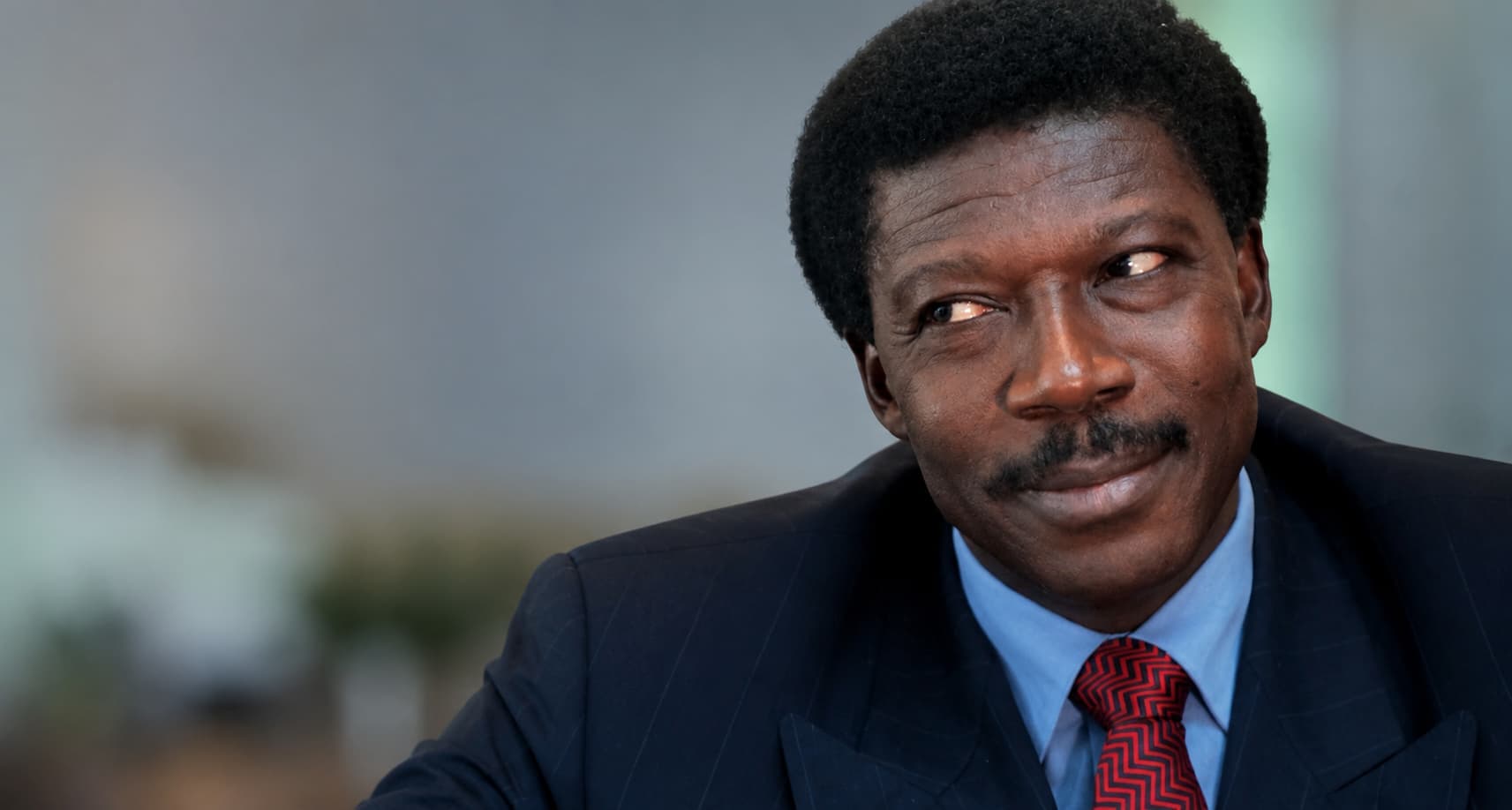
Foutanga Babani Sissoko, the Malian businessman behind Dubai Islamic Bank's $242 million black magic fraud
The lede
In August 1995, a Malian businessman named Foutanga Babani Sissoko walked into the head office of Dubai Islamic Bank asking for a car loan. The branch manager, Mohammed Ayoub, approved it. Sissoko invited him to dinner. Over the meal, according to a 2018 BBC investigation by Brigitte Scheffer, Sissoko told Ayoub he possessed black magic powers capable of doubling any sum of money placed in his care.
By the time the fraud was uncovered in 1998, Ayoub had authorized 183 separate transfers from the bank into Sissoko's accounts around the world, totaling $242 million — pushing Dubai Islamic Bank to the edge of collapse and forcing a state rescue, according to reporting drawn from the BBC investigation and corroborated by regional coverage at the time. Sissoko was eventually arrested, but not in Dubai, and not for the bank fraud itself. He served 43 days in a U.S. federal prison on an unrelated charge, then lived the following two decades as a free man in Mali, protected first by parliamentary immunity and then by his country's lack of an extradition treaty with the UAE. He died in Bamako on March 28, 2021, at age 79, having never faced trial for the $242 million fraud that made his name internationally notorious.
The main report: how the con worked
Ayoub's belief in Sissoko's claimed powers was reinforced through staged demonstrations. According to the BBC's account, when Ayoub returned to Sissoko's residence with cash for the first "doubling" ritual, a man burst from a nearby room shouting that a djinn — a spirit — had just attacked him, and warned Ayoub not to anger it or the money would not multiply. Ayoub left his cash in the room as instructed, reported seeing lights and smoke and hearing voices, and found, after a period of silence, that the sum had indeed grown. Black magic is explicitly condemned in Islam as blasphemous, the BBC noted, yet belief in its power remained widespread enough that Ayoub, by his own account, was convinced.
What followed was not a single theft but a sustained financial relationship. Sissoko did not need to remain in Dubai to keep receiving transfers — one of the scheme's defining features, according to Alan Fine, a Miami attorney the bank later hired to investigate. Sissoko also ran up substantial credit card bills that Ayoub personally settled on his behalf, Fine told the BBC, and weeks into the fraud, Sissoko opened an account at Citibank in New York after what Fine described as an unusually informal introduction: "He walked into Citibank one day, no appointment, met a teller and he ended up marrying her." Fine said he believed the relationship helped smooth Sissoko's dealings with the bank, through which more than $100 million was eventually wired into the United States. Citibank in New York alone received $37.2 million deposited directly into an account under Sissoko's name, according to court and bank records reviewed by the BBC.
Legal background: how a $242 million fraud produced 43 days in custody
The path from fraud to punishment ran through Switzerland and the United States rather than the UAE. Sissoko was arrested in Geneva while attempting to open a new bank account, according to Wikipedia's sourcing of the BBC investigation, and was extradited to the United States, where he assembled a defense team that included former U.S. Senator Birch Bayh. U.S. prosecutors sought to hold him in custody, but he was released on $20 million bail. He ultimately pleaded guilty to a reduced charge — paying an illegal gratuity to a U.S. Customs agent — unrelated to the underlying Dubai Islamic Bank fraud itself, and was sentenced to federal prison, where he served 43 days before being granted early release in exchange for a $1 million payment to a homeless shelter, on condition that he serve the remainder of his sentence under house arrest in Mali.
It was around this point that Ayoub, the bank manager, confessed to the scheme. He was arrested and sentenced to three years in prison for fraud in a Dubai court — making him, by most accounts, the only figure in the entire affair to serve meaningful time on UAE soil for the $242 million taken from Dubai Islamic Bank. Sissoko, once in Mali, was largely untouchable: from 2002 to 2014 he served as a member of Mali's National Assembly, a position that granted him parliamentary immunity, and Mali's absence of an extradition treaty with the UAE meant that even after leaving office, he faced no realistic prospect of being compelled to answer for the fraud in a UAE courtroom. Separately, Dubai Islamic Bank pursued a civil case against Citibank, alleging that more than $151 million had been debited from DIB's correspondent account without proper authorization; that case was later dropped, according to the BBC's reporting.
Timeline
- August 1995: Sissoko approaches Dubai Islamic Bank for a car loan and begins cultivating a relationship with branch manager Mohammed Ayoub.
- November 1995: Weeks into the scheme, Sissoko opens an account at Citibank in New York.
- 1995–1998: Ayoub authorizes 183 transfers to Sissoko's accounts, totaling $242 million.
- 1998: The fraud is discovered; Ayoub confesses and is arrested by UAE authorities.
- Following his arrest in Geneva: Sissoko is extradited to the United States, pleads guilty to an unrelated illegal-gratuity charge, and serves 43 days in federal prison before release tied to a $1 million charitable payment and house arrest in Mali.
- 2000: A Dubai court reportedly convicts Sissoko in absentia on charges connected to the fraud, a conviction he was never made to answer given Mali's refusal to extradite him.
- 2002–2014: Sissoko serves as a member of Mali's National Assembly, gaining parliamentary immunity from prosecution.
- 2018: The BBC's Brigitte Scheffer travels to Sissoko's native village in Mali and interviews him directly about the fraud; Dubai Islamic Bank is reported to still be pursuing him through the courts.
- March 28, 2021: Sissoko dies in Bamako, Mali, at age 79, after a long illness, having never served time in relation to the $242 million fraud itself.
Expert analysis
When the BBC located Sissoko in his native village of Dabia in 2018, surrounded by armed guards, he neither confirmed nor fully denied the substance of the case, instead redirecting responsibility toward the bank's own internal controls. Asked directly about the $242 million, he told the BBC: "The gentlemen from the bank should explain how they lost all that money... It's not this man alone [Ayoub] who authorises the transfers. When the bank transfers money it's not just one person who does it." He described his contact with Ayoub as limited to the original car-loan transaction and downplayed reports that he had claimed supernatural powers over the banker.
Fine, the attorney who investigated the case for the bank, offered a more structural explanation for how the fraud persisted for three years without detection: the transfers were spread across multiple institutions and jurisdictions, and Sissoko's physical absence from Dubai for much of the period meant the scheme did not depend on sustained in-person contact to keep functioning — a pattern that let a single compromised bank employee move an extraordinary sum without the kind of ongoing, visible relationship that might have drawn scrutiny sooner.
Practical implications
For Dubai Islamic Bank, the case remains one of the most significant single-employee fraud losses in the institution's history, serious enough to trigger a state-backed rescue at the time and to prompt a pursued, if ultimately unsuccessful, civil case against Citibank over the flow of funds into the United States. For the broader banking sector, the case is frequently cited in discussions of insider-fraud risk specifically because the fraud's mechanism — a single relationship manager persuaded to bypass standard authorization controls — did not require sophisticated technical circumvention, only sustained personal manipulation of one employee.
For questions of cross-border accountability, the case illustrates how parliamentary immunity and the absence of an extradition treaty can combine to place an individual functionally beyond the reach of a foreign legal system, even following a formal in-absentia conviction. Sissoko's decades in Mali, financed in part by funds he never had to return, stand as a documented instance of that gap in enforcement rather than a hypothetical one.
What's next
There is no ongoing legal proceeding to report: Sissoko's death in March 2021 closed off any prospect of prosecution, extradition or civil recovery directly from him, and no sources reviewed for this article indicate Dubai Islamic Bank pursued the matter further against his estate. What remains open is the case's place in the historical record of major banking fraud — cited alongside contemporaneous cases like Nigerian fraudster Emmanuel Nwude's fictitious-airport scheme as an example of how personal trust, rather than technical sophistication, can move hundreds of millions of dollars through a bank's own authorized channels.
Source: BBC (via Nehanda Radio)
Priya Nair is a reporter with the Wirestork newsroom, where she covers corporate law, banking and financial regulation across the Gulf. Her beat spans company formation, corporate compliance, anti-money-laundering rules, banking and the wider financial-regulation landscape — the areas where regulatory change carries direct commercial consequences. Priya focuses on making dense regulatory developments understandable: what a new compliance requirement, licensing rule or AML measure actually demands, which businesses it touches, and where the official text can be found. She works from primary sources — regulator notices, official circulars and public records — and attributes every factual claim to a verifiable origin. Her reporting aims to give founders, finance teams and compliance professionals a clear, accurate read on change as it happens, while keeping news reporting separate from legal or financial advice. Priya reports in English, Hindi and Arabic. For tips or corrections on corporate and financial coverage, readers can contact the Wirestork newsroom.