
Saudi Arabia Opened Its Property Market — But Not All of It
The lede
Saudi Arabia's Law of Real Estate Ownership by Non-Saudis took effect January 21, 2026, ending a restriction that, outside narrow business exceptions, had locked foreigners out of Saudi property ownership since 2000. The headlines that followed described an opening. The law itself describes something narrower: ownership confined to government-designated zones, a parallel right to buy one home outside those zones that excludes several of the Kingdom's largest cities, and a combined 10% in fees on top of the purchase price.
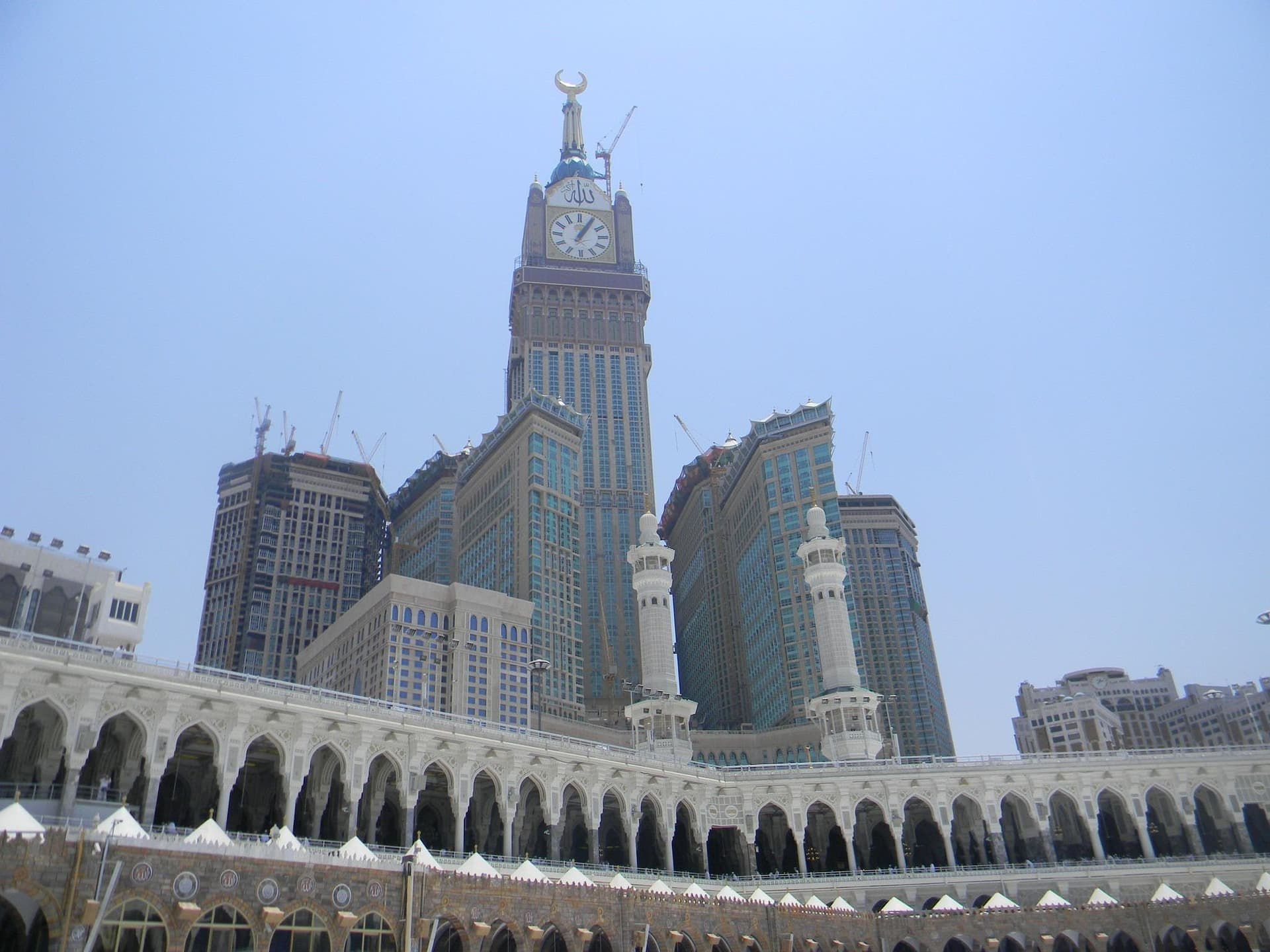
Majed Al-Hogail, the minister of municipal and rural affairs and housing who also chairs the Real Estate General Authority, called the reform "an extension of the Kingdom's comprehensive real estate reform agenda" when the Cabinet approved it. REGA said the updated system would open residential ownership to foreigners in most Saudi cities — with an explicit exception for four: Mecca, Medina, Jeddah and Riyadh, the country's holiest sites and its two largest, most expensive property markets. Ownership in those four remains confined to whatever zones the Council of Ministers designates, on REGA's recommendation, rather than opening city-wide.
Will ordinary foreigners actually be able to buy?
The zoning structure means the answer depends entirely on documents Saudi authorities had not fully published as this article was reported. The law authorizes REGA to issue a Geographic Scope Document, expected in the first quarter of 2026, spelling out exactly which areas qualify and what ownership ratios apply within them. Law firm Bird & Bird, advising commercial investors on the framework, described the result as "a rules-based, designated-zone model" that remains "controlled rather than fully open," with eligibility verified property-by-property against the approved zones, the buyer's category, and applicable ownership caps.
Cost is a separate filter. Every transaction by a non-Saudi carries a REGA transfer fee of up to 5%, layered on top of the existing 5% real estate transfer tax — a combined 10% bite that Reuters reported when the implementing rules were published. Separately, Saudi Arabia's parallel premium-residency track — not the same law, but a signal of where the government has set its bar for foreign capital — ties long-term residency to a minimum SAR 4 million ($1.07 million) property investment, roughly double the AED 2 million (about $545,000) threshold in the UAE's comparable Golden Visa program. Cavendish Maxwell, a regional property consultancy, forecast in an April 2026 market report that the new ownership rules would add "incremental demand" but predicted it would stay "concentrated in select segments rather than boost demand across the wider market" — a measured read that cuts against any expectation of a mass influx of ordinary foreign buyers.
Is this really about raising money?
Saudi Arabia's giga-projects have absorbed capital far faster than they have absorbed investors. Neom, the flagship $500 billion desert city announced in 2017, had spent roughly $50 billion by late 2025 with construction on its centerpiece, The Line, effectively suspended, according to reporting by the Financial Times and other outlets. Saudi Aramco cut its dividend by an estimated $40 billion for 2025, directly reducing cash available to the Public Investment Fund, Neom's primary backer, and the PIF's broader giga-project portfolio absorbed an $8 billion write-down at the end of 2024. Brent crude traded around $71 a barrel through mid-2025, well below the $90-plus level analysts say the Saudi state budget needs to balance.
Against that backdrop, opening real estate to foreign capital reads as one lever among several — alongside spending cuts and project rescoping — for narrowing a widening fiscal gap. The law's own promotional framing leans the same way: Al-Hogail said the changes were designed to "increase real estate supply, attract global investors and developers, and further stimulate foreign direct investment," and consulting firm Middle East Briefing linked the reform directly to funding "major urban, tourism, hospitality, retail and mixed-use projects" including Neom, Qiddiya and the Red Sea development. None of the government's own statements frame the law as a direct Neom rescue package, and no source reviewed for this article ties specific foreign property revenue to specific project shortfalls — but the timing, arriving as the PIF's cash position tightened, is difficult to read as coincidental.
Could this inflate housing prices for Saudis?
Affordability pressure predates the foreign-ownership law and was already acute before it took effect. Riyadh apartment prices rose roughly 81% and villa prices climbed sharply in the years following the pandemic, according to Financial Times figures cited by multiple property researchers, while Knight Frank's 2025 residential survey found two-thirds of Saudi households can afford SR1.2 million or less even as new developments cluster in the SR2 million-to-SR4 million range. The government introduced a five-year rental freeze across Riyadh in September 2025 specifically in response to mounting affordability complaints, according to property consultancy Cavendish Maxwell.
London-based real estate consultant Ali Metwally told Al Araby that Saudi housing transactions reached nearly $29 billion in the first quarter of 2025 alone, up 37% year over year, and warned that foreign capital could push prices "further out of reach" in Riyadh and Jeddah — the same two cities REGA has placed under tighter ownership restrictions rather than opening broadly. Metwally recommended taxing unused land and expanding subsidized housing as counterweights. Saudi Arabia had already moved on the first of those before the ownership law passed: authorities raised the so-called White Land Tax on undeveloped urban plots to 10% in 2025, a measure aimed at discouraging speculative land holding independent of the new foreign-ownership rules.
Knight Frank's Faisal Durrani offered a more optimistic reading of the same tension, arguing that Saudi Arabia risks a glut of unsold luxury housing "unless new sources of demand are identified or tapped into, chiefly, international buyer demand" — suggesting foreign buyers may absorb inventory the domestic market cannot, rather than compete with Saudis for the same homes. Whether that plays out as advertised depends on whether foreign purchases concentrate in the premium segment Durrani describes or spill into the mid-market housing most Saudis are actually competing for — a distinction the Geographic Scope Document, once published, should help clarify.
Is this the beginning of investment migration?
Not under this law, which governs ownership rights, not residency status. But Saudi Arabia already operates a separate track that links the two: its Premium Residency program's real estate category grants long-term residency to anyone who buys a mortgage-free residential property worth at least SAR 4 million. That program predates the new ownership law and shows the government is comfortable using property as a residency lever when it chooses to. Bloomberg reported in January 2026 that Saudi Arabia is separately drafting an ultra-high-net-worth residency track requiring a verified net worth of roughly $30 million, with a dedicated pathway for superyacht owners — evidence the Kingdom is actively expanding, not just maintaining, its menu of investment-linked residency options even as the property-ownership law itself stops short of granting residency automatically.
Who benefits?
Developers are the clearest early winners. Gulf News reported that Emaar and Damac — Dubai-listed developers already active in the Kingdom — are expanding their Saudi presence, and cited the launch of a Trump Tower Jeddah project, developed by Dar Global just ahead of a comparable Trump-branded tower in Dubai, as evidence of investor appetite. A property source told the outlet Saudi Arabia is "now a bona fide investment destination, and not just for domestic and GCC investors." REGA and the PIF benefit structurally: REGA collects the new transfer fee on every non-Saudi transaction, and PIF-linked megaprojects gain a broader pool of potential capital sources at a moment when internal Saudi funding has tightened. Whether ordinary foreign buyers — as opposed to developers, funds and the state itself — end up net beneficiaries is the open question the law's implementation will answer.
Will this hurt Dubai?
Not obviously, and not yet. Dubai's freehold market has a two-decade head start, an established expatriate population, and no equivalent to the exclusions Saudi Arabia has placed on Riyadh and Jeddah. Saudi Arabia's higher investment thresholds — the SAR 4 million premium-residency benchmark runs nearly double Dubai's AED 2 million Golden Visa minimum — position the Kingdom as a complement to Dubai's market for large-scale institutional and developer capital rather than a direct substitute for individual buyers. The clearest evidence so far points the other way: UAE-based developers are entering the Saudi market rather than Saudi capital fleeing toward the UAE, suggesting the two markets are currently expanding in parallel rather than competing for the same pool of buyers.
Will speculators arrive before residents?
Saudi Arabia has built at least one explicit safeguard against speculative flipping into the framework: violations of the new ownership rules, including acquiring property through false information, can result in fines of up to SR10 million, with improperly acquired properties subject to public auction, according to rules REGA published ahead of the law's effective date. The pre-existing 10% White Land Tax on undeveloped urban land separately discourages the land-banking pattern seen in other markets that opened rapidly to foreign capital, though it was not designed specifically for this law and predates it.
What the framework does not yet include, based on the sources reviewed for this article, is an owner-occupancy requirement, a minimum holding period before resale, or a public vacancy tax targeting foreign-owned units left empty — tools some other markets have used specifically to slow speculative resale. Whether REGA's forthcoming Geographic Scope Document and implementing regulations add measures of that kind remains one of the clearest open questions in the rollout.
Legal background
The new statute, approved by Royal Decree M/14 and published in Saudi Arabia's official gazette on July 25, 2025, replaces the country's 2000-era Law of Real Estate Ownership and Investment by Non-Saudis, which had confined foreign ownership largely to licensed business use. Under the new law, five categories of non-Saudis are eligible to acquire real estate rights: foreign individuals, foreign companies, Saudi companies with foreign ownership, listed investment vehicles, and licensed funds — each subject to different conditions set by the Council of Ministers on REGA's recommendation. Foreign companies and investment funds retain broader latitude than individuals: White & Case, advising corporate clients on the law, noted that eligible companies can acquire property even within Mecca and Medina when the purchase serves an approved business purpose such as staff housing, a right individual foreign buyers do not share. All acquisitions must be recorded in the national Real Estate Registry to be legally effective, and REGA has launched a "Saudi Properties" digital platform to process applications, with residents applying directly and non-residents required to obtain digital identification through Saudi embassies abroad.
Timeline
- 2000: Saudi Arabia's original Law of Real Estate Ownership and Investment by Non-Saudis takes effect, restricting foreign ownership to licensed business use.
- 2017: Crown Prince Mohammed bin Salman announces Neom, the $500 billion megaproject later scaled back amid funding pressure.
- July 8, 2025: The Council of Ministers approves the new Law of Real Estate Ownership by Non-Saudis.
- July 25, 2025: The law is published in the official gazette, triggering a 180-day countdown to enforcement.
- September 2025: Riyadh authorities impose a five-year rental freeze in response to affordability pressure on citizens.
- Late 2025: Reports emerge that Neom's flagship project, The Line, has been effectively suspended after roughly $50 billion in spending.
- January 21–22, 2026: The Law of Real Estate Ownership by Non-Saudis enters into force.
- Q1 2026 (expected): REGA to publish the Geographic Scope Document defining exact zones open to foreign ownership.
Expert analysis
Legal advisers to institutional investors describe the reform in measured terms rather than triumphant ones. Greenberg Traurig called it "a calibrated opening for foreign investors" — a framework "designed to welcome foreign capital while preserving national values, cultural sensitivities, and market equilibrium," language that reads as much like a hedge as an invitation. Bird & Bird's assessment was more direct: the regime "remains controlled rather than fully open," with every acquisition still subject to zone-by-zone, buyer-by-buyer verification.
On the housing-affordability question, the split runs along disciplinary lines. Property consultants like Knight Frank's Durrani see foreign demand as a release valve for a domestic luxury-housing glut Saudi developers have already built. Economists like Metwally see the same capital inflow as a threat multiplier layered on top of an affordability crisis that predates the law by years. Neither claim has yet been tested against real transaction data, since the ownership law took effect only months before this article was reported and REGA's zone-specific rules were still being finalized.
Practical implications
For prospective foreign buyers, the practical reality is that "Saudi Arabia opened its property market" and "an ordinary foreign buyer can now purchase a home in Riyadh" are different claims. Riyadh and Jeddah — the cities with the deepest expatriate populations and the strongest investment case — are precisely where ownership remains confined to zones still being finalized, rather than open by default.
For Saudi citizens, the affordability question will likely be decided by where those zones end up, not by the existence of the law itself. A Geographic Scope Document that concentrates foreign ownership in new master-planned developments and giga-project zones would largely avoid competing with existing Saudi housing stock; one that opens established Riyadh or Jeddah neighborhoods would not.
For governments and developers elsewhere in the Gulf, the law is a signal to watch rather than an immediate competitive threat. Saudi Arabia's higher investment thresholds, narrower initial geography, and heavier fee structure suggest a market positioning itself to compete for large-scale institutional capital first, and individual buyers second — a sequencing that gives Dubai's more mature freehold market time to adjust rather than forcing an immediate response.
What's next
REGA's Geographic Scope Document, due in the first quarter of 2026, will determine far more about who actually benefits from this law than the headline decree itself. Until it is published in full detail, along with the accompanying implementing regulations covering ownership ratios and registration procedures, questions about affordability, speculation and which foreigners can realistically buy where remain open rather than answered. Saudi Arabia has told investors, developers and its own citizens that the market is opening. Whether it opens evenly — or mainly in the zones and price segments the state has already earmarked for its giga-projects — is the story still being written.
Source: Saudi Arabia's New Rules on Real Estate Ownership for Non-Saudis — Sovereign Group
Priya Nair is a reporter with the Wirestork newsroom, where she covers corporate law, banking and financial regulation across the Gulf. Her beat spans company formation, corporate compliance, anti-money-laundering rules, banking and the wider financial-regulation landscape — the areas where regulatory change carries direct commercial consequences. Priya focuses on making dense regulatory developments understandable: what a new compliance requirement, licensing rule or AML measure actually demands, which businesses it touches, and where the official text can be found. She works from primary sources — regulator notices, official circulars and public records — and attributes every factual claim to a verifiable origin. Her reporting aims to give founders, finance teams and compliance professionals a clear, accurate read on change as it happens, while keeping news reporting separate from legal or financial advice. Priya reports in English, Hindi and Arabic. For tips or corrections on corporate and financial coverage, readers can contact the Wirestork newsroom.