
Are you or your company wanted internationally?Check Now β†’
Wirestork logo
Services
Share
Homeβ€ΊBlogβ€ΊEmployment Law Saudi
Employment Law SaudiLegal Q&A

What Is the 60-Day Qiwa Transfer Window After Contract Termination?

SA
Sara Al Mansoori
Senior Legal Analyst
|
22 July 2026Β·2 min read
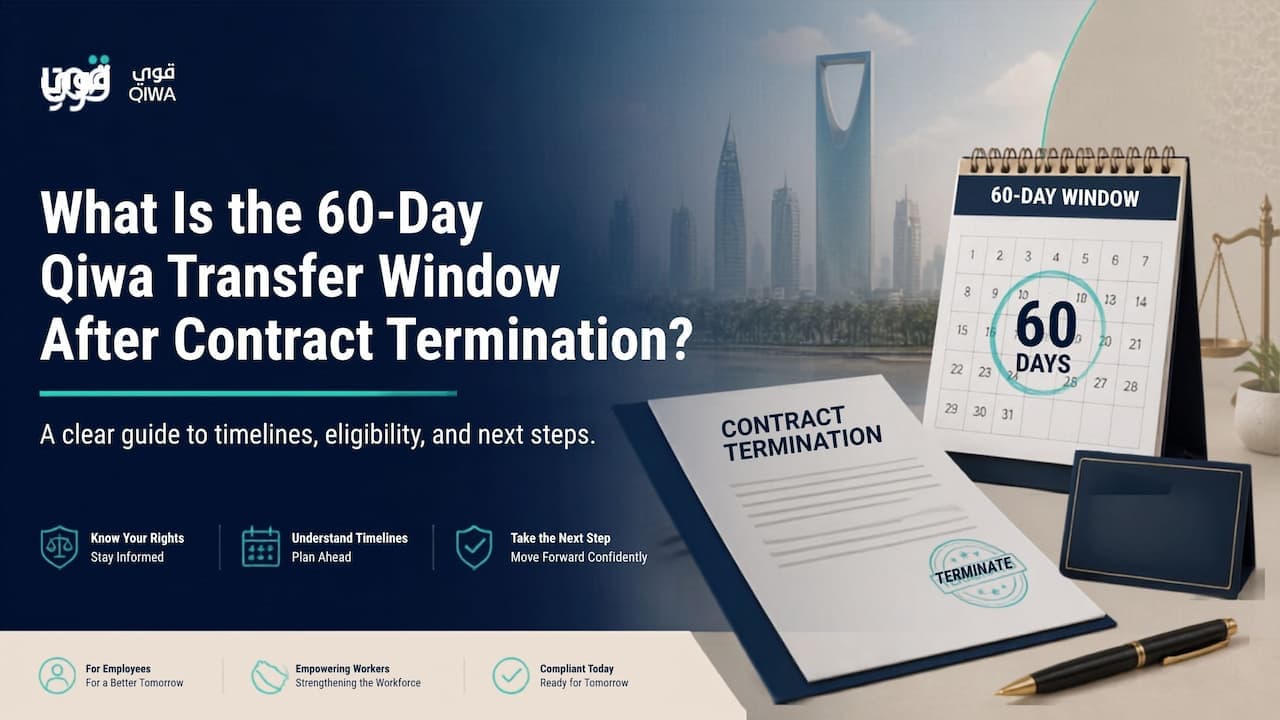
Illustration of a 60-day countdown clock beside a Qiwa sponsorship transfer icon in Saudi Arabia

After a Qiwa employment contract ends, workers in Saudi Arabia generally have a 60-day window to transfer sponsorship to a new employer or otherwise regularize their status before facing more serious residency consequences - the same general grace period referenced in guidance on resolving huroob cases.

AI Summary

This article explains the 60-day window Saudi Arabia's Qiwa platform generally provides for a worker to transfer sponsorship to a new employer after their contract is terminated, before facing more serious residency consequences. It covers what the window covers, how to use it, and what happens if it lapses without action.

Generated by AI Β· Not legal advice

Key Takeaways
  • Workers whose Qiwa contract is terminated generally have a 60-day window to transfer sponsorship to a new employer or otherwise regularize their status before facing more serious consequences.
  • This window is the same general grace period referenced in huroob resolution guidance, since an unresolved termination or absence can otherwise convert into a formal absconding record.
  • Using the window effectively means either securing a new sponsor and completing the Qiwa transfer promptly, or applying for a Final Exit visa if remaining in Saudi Arabia isn't the goal.
  • Letting the 60-day window lapse without action risks the status escalating, with consequences for future work eligibility, sponsorship transfer, and re-entry.

What the Window Is For

The 60-day period exists to give a worker whose contract has ended - whether through resignation, termination, or expiry - time to either secure a new sponsor and complete a transfer through Qiwa, or to arrange a Final Exit visa if they intend to leave Saudi Arabia. It functions as a buffer against an unresolved employment situation turning into an irregular residency status.

How to Complete a Sponsorship Transfer Within the Window

  1. Secure a new employer willing to sponsor you during the window
  2. Have the new employer initiate or accept the sponsorship transfer request through the Qiwa platform
  3. Confirm any outstanding dues or clearances with the former employer are resolved, since unresolved issues can complicate the transfer
  4. Verify the transfer has been completed and your status updated, rather than assuming it processed automatically

What Happens If the Window Lapses

If neither a sponsorship transfer nor a Final Exit is completed within the window, the status can escalate - potentially converting into a more formal irregular-residency record with consequences for future work eligibility, sponsorship transfer, and the ability to re-enter Saudi Arabia later. This is why treating the window as a hard deadline, rather than a loose guideline, matters.

For a closer look at what happens after this window lapses in the huroob context specifically, see our guide on how to sue an employer for a false huroob report and cancel it through HRSD.

Key Takeaways

  • The 60-day window gives workers time to transfer sponsorship or arrange a Final Exit after a Qiwa contract ends.
  • A completed transfer requires a new sponsor and prompt action through the Qiwa platform.
  • Letting the window lapse risks escalation to a more serious residency status.

Conclusion

The 60-day window after a Qiwa contract ends is a genuine opportunity, not just a formality - using it to secure a new sponsor or arrange an orderly exit is far preferable to letting it lapse and facing the more serious consequences that follow. Treat the deadline as firm and act early rather than waiting to see how things unfold.

Questions This Article Answers

SA
About the Author
Sara Al Mansoori
Senior Legal Analyst

Sara Al Mansoori is a Senior Legal Analyst at Wirestork with over nine years of experience researching UAE federal legislation, DIFC court procedures, and GCC employment disputes. She specialises in travel ban regulations, labour dispute resolution, and immigration compliance across the Emirates.