
Are you or your company wanted internationally?Check Now β†’
Wirestork logo
Services
Share
Homeβ€ΊBlogβ€ΊSaudi Law
Saudi LawLegal Q&A

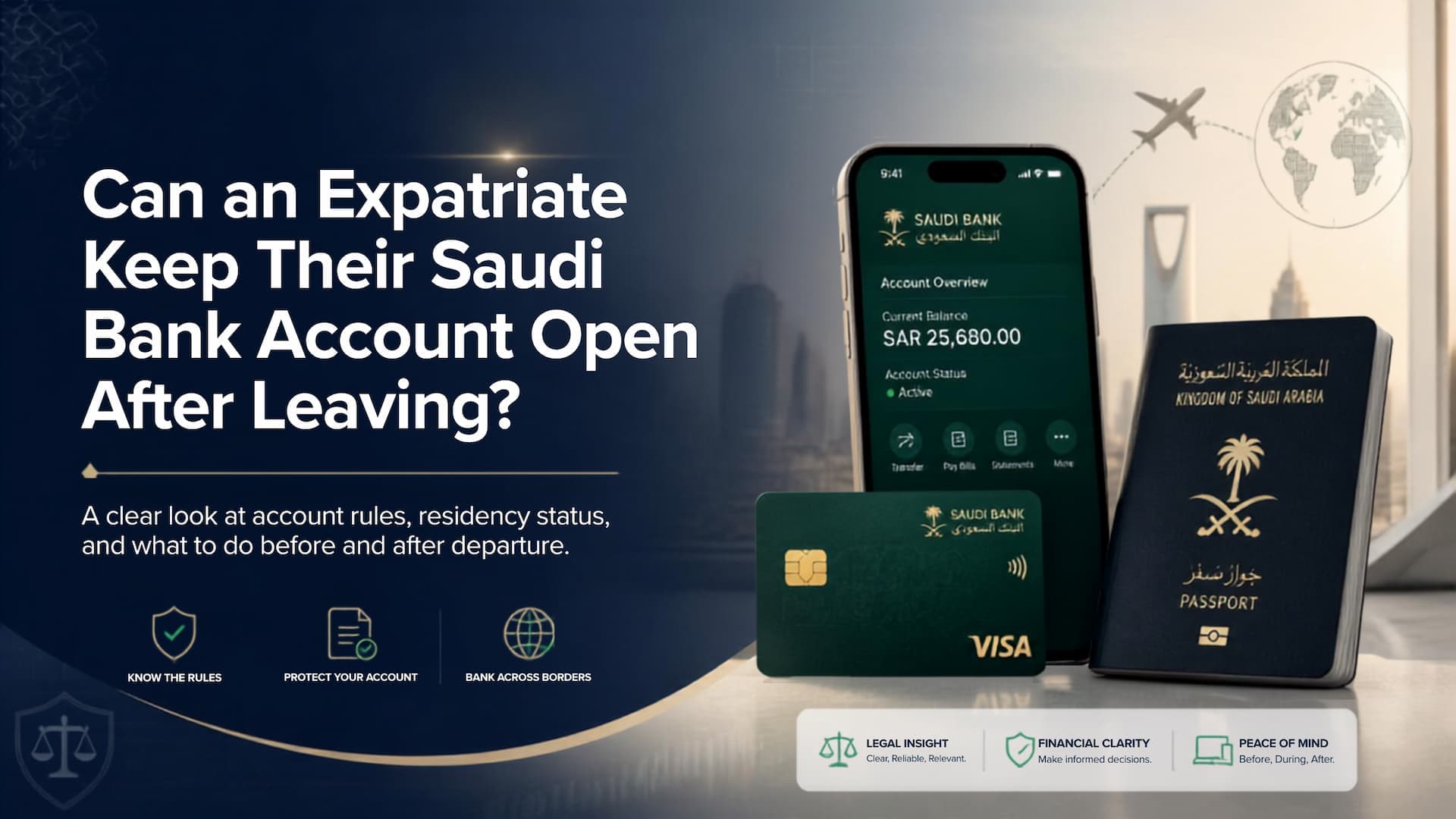
Can an Expatriate Keep Their Saudi Bank Account Open After Leaving?

JW
James Whitfield
International Legal Analyst
|
23 July 2026Β·2 min read
Saudi bank account remaining open for an expatriate after departure

Whether an expatriate can keep their Saudi bank account open after leaving depends mainly on the type of departure. A Final Exit generally expects the account to be settled and closed, since you're not expected to return, while a temporary exit or re-entry visa doesn't require this at all.

AI Summary

This article explains whether an expatriate can keep their Saudi bank account open after leaving the country, covering the difference between a final exit (which typically requires account closure or settlement) and other departure scenarios, and the practical steps to manage or properly close an account before or after leaving.

Generated by AI Β· Not legal advice

Key Takeaways
  • Whether a bank account can remain open after leaving generally depends on the type of departure - a Final Exit typically expects the account to be settled and closed, while a temporary exit or re-entry visa does not.
  • Banks may freeze or restrict an account automatically once a Final Exit is processed, particularly where outstanding loans or obligations exist.
  • Expatriates planning to leave permanently should proactively contact their bank to settle balances and formally close or transfer the account rather than leaving it inactive.
  • Attempting to keep an account open informally after a Final Exit can create complications, including potential freezes, if the bank's systems flag the departure.

Final Exit vs. Temporary Departure

A Final Exit visa signals a permanent departure from Saudi Arabia, ending the residency relationship entirely. Banks generally treat this as the point at which an account should be settled and formally closed, particularly since ongoing residency and a valid Iqama are typically required to maintain many types of accounts. Someone leaving temporarily on an exit/re-entry visa, by contrast, remains a resident and can generally keep their account active as normal.

Why Accounts Get Frozen or Restricted After Final Exit

Once a Final Exit is processed, banks may automatically restrict or freeze linked accounts, especially where an outstanding loan, credit card balance, or other financial obligation is attached. This is partly a protective measure for the bank and partly tied to residency requirements underpinning the account relationship in the first place.

How to Handle Your Account Before Leaving

  1. Contact your bank well before your planned Final Exit to understand their specific closure or settlement requirements
  2. Settle any outstanding loans, credit cards, or linked obligations before departure where possible
  3. Arrange to formally close the account or transfer remaining funds, rather than leaving it open and inactive
  4. If an outstanding balance can't be settled before departure, discuss a resolution plan with the bank directly rather than simply leaving

For related guidance on managing your finances around a Final Exit, see our guide on whether a Saudi bank account freezes automatically after a Final Exit is issued.

Key Takeaways

  • A Final Exit generally expects account settlement and closure; a temporary exit does not.
  • Banks may automatically restrict accounts after Final Exit, especially with outstanding obligations.
  • Proactively contacting your bank before departure is the most reliable way to avoid complications.

Conclusion

Leaving Saudi Arabia permanently means treating your bank account as something to actively wrap up, not leave running quietly in the background. Reaching out to your bank ahead of a Final Exit and settling things properly avoids the freeze-and-complication scenario that catches a lot of departing expatriates off guard.

Questions This Article Answers

JW
About the Author
James Whitfield
International Legal Analyst

James Whitfield is Wirestork international legal analyst focusing on DIFC Courts jurisprudence, ADGM regulations, and common law principles within the UAE financial free zones. He holds an LLM in International Arbitration from the National University of Singapore.