
Are you or your company wanted internationally?Check Now β†’
Wirestork logo
Services
Share
Homeβ€ΊBlogβ€ΊEmployment Law Saudi
Employment Law SaudiLegal Q&A

How to File a Labor Dispute with MHRSD: A Comprehensive Guide

JW
James Whitfield
International Legal Analyst
|
24 July 2026Β·3 min read
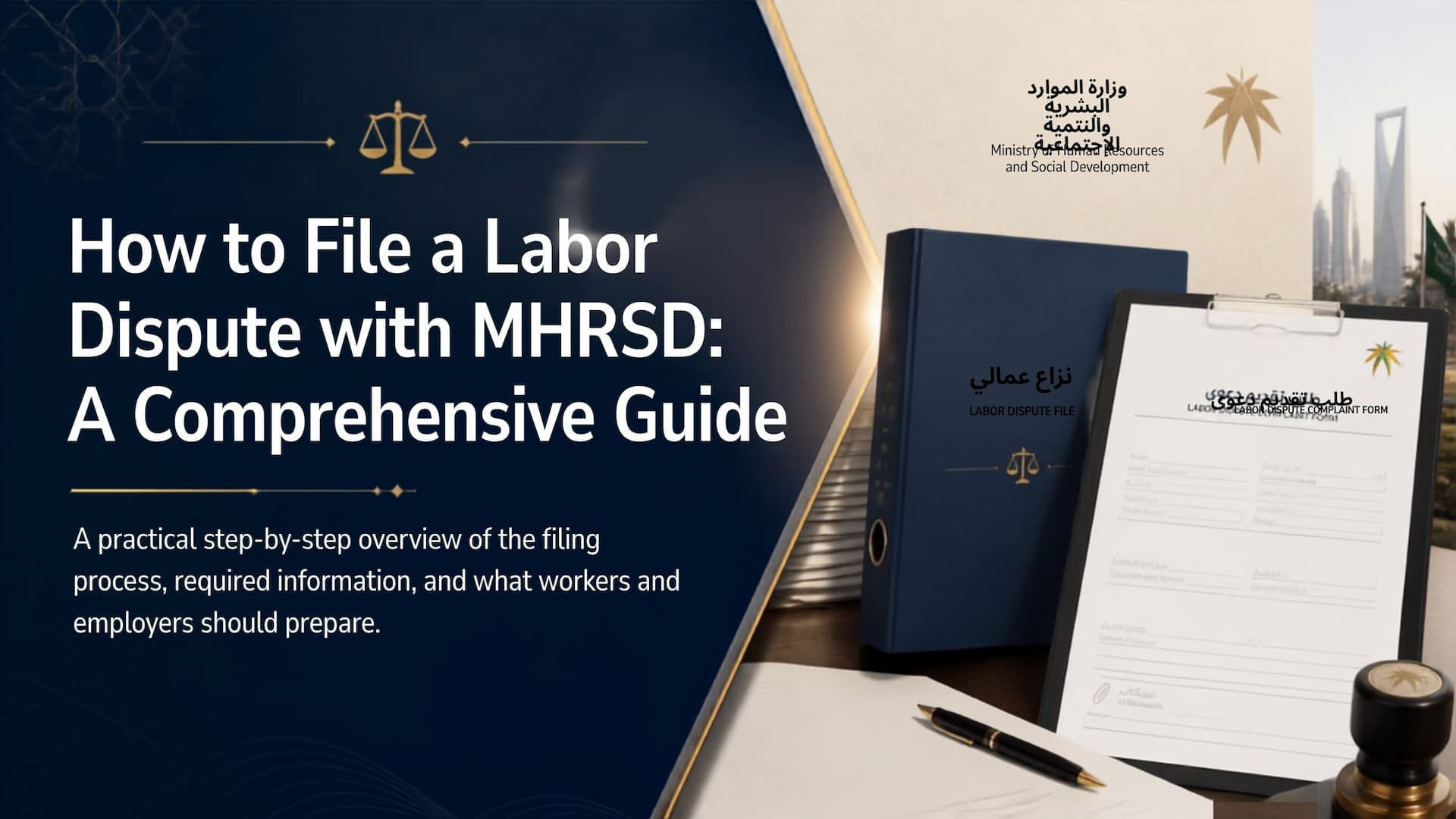
Worker filing a labor dispute complaint with MHRSD in Saudi Arabia

Filing a labor dispute with MHRSD in Saudi Arabia starts with the ministry's dispute settlement process, generally accessed through Qiwa, where you submit your employment contract, supporting documentation, and a clear description of the issue. If the ministry can't resolve it, the case proceeds to the labor courts for a binding decision.

AI Summary

This article provides a comprehensive walkthrough of how to file a labor dispute with Saudi Arabia's Ministry of Human Resources and Social Development (MHRSD), covering the initial settlement process, required documentation, and how a case proceeds to the labor courts if not resolved at the ministry level.

Generated by AI Β· Not legal advice

Key Takeaways
  • Labor disputes in Saudi Arabia generally start with MHRSD's dispute settlement process, which attempts an initial resolution before a case proceeds further.
  • Filing typically requires the employment contract, relevant correspondence, and a clear description of the dispute, often submitted through Qiwa or the applicable MHRSD channel.
  • If the ministry-level process doesn't resolve the dispute, it proceeds to the labor courts for a binding ruling.
  • Keeping thorough documentation throughout the employment relationship - not just after a dispute arises - significantly strengthens a worker's position at every stage.

Step 1: Confirm the Dispute Falls Within MHRSD's Scope

MHRSD handles employment-related disputes - unpaid wages, wrongful termination, contract breaches, and similar workplace issues. Confirming your issue fits this scope before filing saves time and points you to the right process from the start.

Step 2: Gather Your Documentation

  • Your Qiwa-registered employment contract
  • Payslips or salary payment records relevant to the dispute
  • Any written correspondence with your employer about the issue
  • A clear, factual written summary of what happened and what you're seeking

Step 3: Submit the Complaint

File your complaint through the MHRSD dispute settlement channel, typically accessible through Qiwa, providing your documentation and a description of the dispute. The ministry will then attempt to facilitate a resolution between you and your employer.

Step 4: The Settlement Process

During this stage, MHRSD generally reviews the submitted information and may facilitate discussion between both parties to reach a resolution without needing to go to court. Many disputes are resolved at this stage.

Step 5: Escalation to the Labor Courts

If the dispute isn't resolved through MHRSD's process, it proceeds to the labor courts, where a judge reviews the evidence from both sides and issues a binding ruling. This is where thorough documentation from the outset becomes especially valuable.

For guidance on building a strong case specifically around wrongful dismissal, see our guide on how to prove wrongful dismissal in KSA labor courts.

Key Takeaways

  • Labor disputes start with MHRSD's settlement process, generally accessed through Qiwa.
  • Strong documentation - contract, payslips, correspondence, a clear written summary - is essential.
  • Unresolved disputes escalate to the labor courts for a binding ruling.

Conclusion

Filing a labor dispute with MHRSD is a structured, two-stage process - ministry settlement first, labor courts if needed. Coming in organized, with your documentation ready and a clear account of the issue, gives you the strongest possible position at either stage.

Questions This Article Answers

JW
About the Author
James Whitfield
International Legal Analyst

James Whitfield is Wirestork international legal analyst focusing on DIFC Courts jurisprudence, ADGM regulations, and common law principles within the UAE financial free zones. He holds an LLM in International Arbitration from the National University of Singapore.