
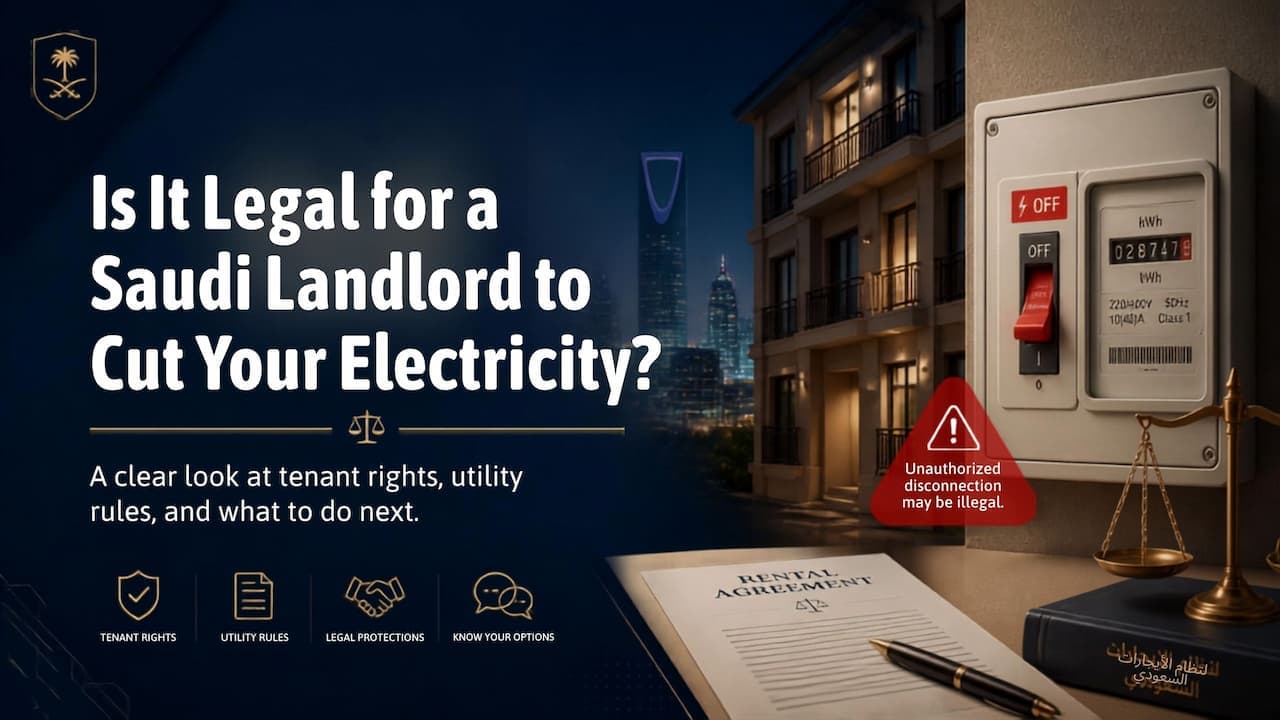
This article explains whether a landlord in Saudi Arabia can legally cut a tenant's electricity, generally to pressure payment or force an eviction. Disconnecting utilities without going through the proper legal channel is a form of unlawful self-help eviction; tenants facing this can file a complaint with the Rental Disputes Committee and, separately, secure their electricity account through the Saudi Electricity Company's app.
Generated by AI · Not legal advice
- A landlord cutting a tenant's electricity to force payment or eviction is a form of unlawful self-help action - lawful eviction requires a Rental Disputes Committee ruling, not utility disconnection.
- Tenants facing this can file a complaint with the Rental Disputes Committee (accessible via Najiz) and may be entitled to compensation for losses caused by the disconnection.
- Electricity accounts are generally registered to whoever holds the meter contract, which is sometimes the landlord rather than the tenant - checking and, where possible, transferring the account into the tenant's name via the Saudi Electricity Company's app reduces this risk going forward.
- Documenting the disconnection (photos, dates, any communication with the landlord) strengthens a tenant's position before the Rental Disputes Committee.
Questions This Article Answers
Sara Al Mansoori is a Senior Legal Analyst at Wirestork with over nine years of experience researching UAE federal legislation, DIFC court procedures, and GCC employment disputes. She specialises in travel ban regulations, labour dispute resolution, and immigration compliance across the Emirates.